


Brachial plexus injuries can occur at birth or later in life as a result of an accident or trauma. Whatever the cause, the consequences can be serious and long-lasting.
Where negligence is involved – whether on the part of a medical professional or another party – the injured person, or their parent or guardian, may have grounds for a compensation claim.
Continue reading or jump to an area of interest:
- what brachial plexus injury is
- reliable medical resources for further information
- common causes of brachial plexus injuries
- claims for brachial plexus injuries in infants
- what constitutes medical negligence
- road accident-related claims for brachial plexus injuries
- examples of successful brachial plexus injury claims
- how to diagnose and treat brachial plexus injury.
What is a brachial plexus injury?
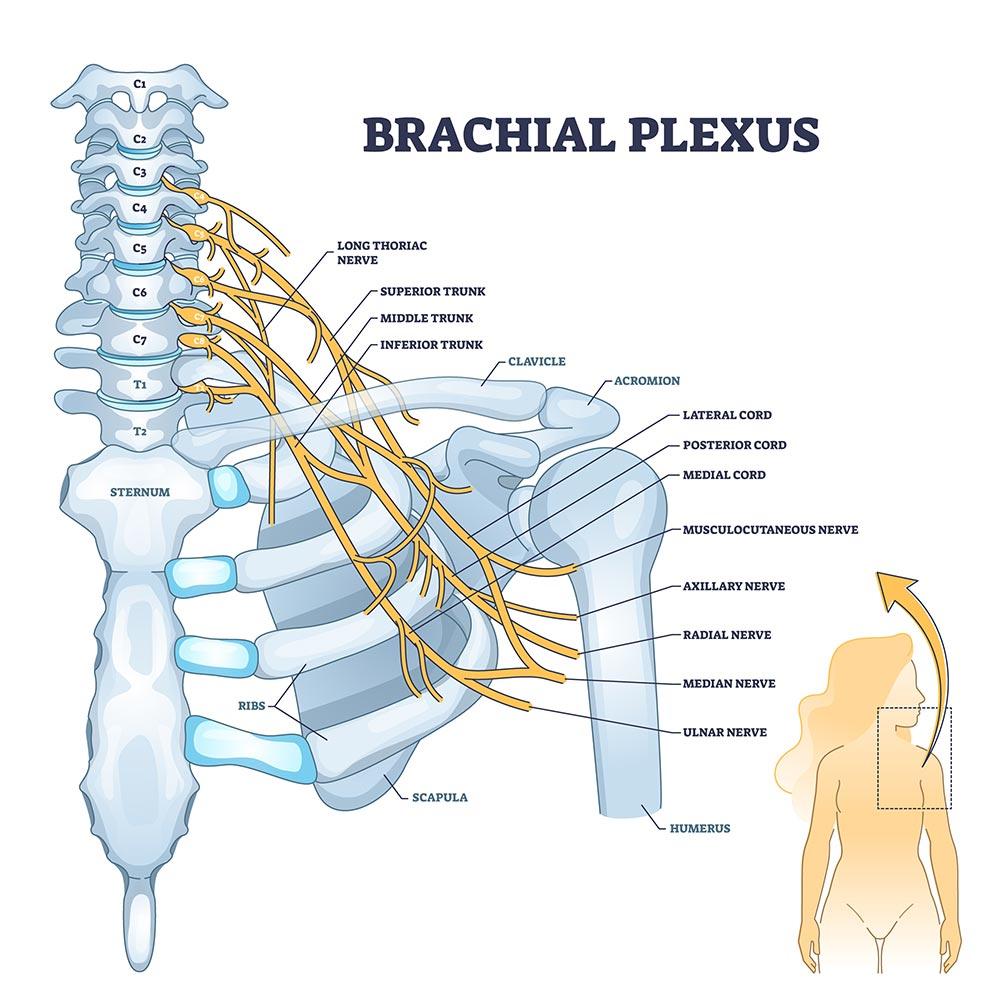
The brachial plexus is a bundle of nerves that supports sensation and mobility in the shoulders, arms and hands.
When these nerves are damaged, the result can be physical impairment that affects everyday functioning – and, in adults, the ability to work.
Recommended medical sources of information
We’ve listed leading sources of reliable information on the diagnosis, treatment and incidence rate of brachial plexus injuries in newborns and adults:
- Johns Hopkins Medicine: Brachial Plexus Injuries
- US National Institute of Neurological Disorders and Stroke: Brachial Plexus Injury
- Mayo Clinic: Brachial Plexus Injury
- UPMC: Brachial Plexus Injury.
Most common causes of brachial plexus injuries
The most common causes of brachial plexus injuries are high-speed collisions involving motor vehicles and trauma suffered by infants during birth.
These injuries can cause lack of muscle control, reduced sensation and partial or total paralysis of the affected limb, often requiring immediate and on-going medical treatment.
Claims for brachial plexus birth injuries
Brachial plexus injuries involving newborn babies are common. They usually happen when the infant’s head or shoulders get stuck in the birth canal.
Common risk factors include prolonged labour, a breech delivery or a baby with a high birth weight.
Tugging during delivery can stretch the baby’s brachial plexus nerves, causing mild to severe damage.
If the injury results from negligence or medical malpractice, a personal injury claim can be instituted on the baby’s behalf.
What constitutes medical negligence or malpractice in this scenario?
A doctor or attending healthcare provider may be considered negligent if he or she:
- used too much force
- failed to detect and act upon obvious signs of birth complications that warranted a Caesarean section
- misused instruments, such as forceps or an extraction pump.
Proving medical negligence or malpractice requires the specialised legal knowledge and litigation skills of an experienced personal injury lawyer.
Claims for brachial plexus injuries due to road accidents
Collisions involving motor vehicles can result in severe brachial plexus injuries.
Drivers, passengers and other road users who are injured in a road accident that was not their fault can lodge a claim for monetary compensation with the Road Accident Fund (RAF).
The onus is on the claimant to submit documentation and gather expert testimony to support the medical aspects of the claim.
The most effective way of dealing with a claim against the RAF is to use the services of a personal injury attorney.
Successful brachial plexus injury claims
A successful brachial plexus injury claim is reliant on detailed evidence, expert medical testimonies and an in-depth understanding of the law.
Here’s a round-up of a few notable claims, some of which have resulted in substantial compensatory awards.
Motorcyclist awarded R6.367 million for loss of earnings
In 2018, a 25-year-old motorcyclist was struck by an oncoming car.
The man, an apprentice panel beater, sustained multiple injuries, including a serious brachial plexus injury to the nerve roots C5 through T1.
The injuries severely impaired the use of his right hand and upper limb, leaving him unable to work.
A claim lodged against the RAF for pain and suffering was denied.
However, the court awarded a sum of R6.367 million in respect of past and future loss of income.
Mother succeeds with claim for infant son
In 2022, the Eastern Cape High Court found medical staff at a local hospital had failed to deliver a child with the proper skill and care.
The baby, whose shoulder was stuck in the mother’s pelvis, was forcibly delivered, resulting in injury to the brachial plexus. As a result of the injury, the child’s right hand and arm are smaller and weaker than the left.
Damages are yet to be quantified.
Woman awarded R1.84 million
A woman, who was sideswiped by a car while riding her motorcycle in September 2022, successfully claimed damages from the RAF.
Compensation, amounting to R1.84 million, was awarded in respect of past medical expenses, and past and future loss of income. A claim for general damages was postponed to a later date.
The woman suffered fractures to the cervical spine, ribs, left wrist and right shoulder.
The trauma to the shoulder resulted in serious harm to the brachial plexus, an injury that was likely to limit her ability to earn future income.
RAF pays R2.235 million to accident victim
In 2005, a nurse who was a passenger in a vehicle involved in a collision was awarded compensation of R2.235 million from the RAF.
The woman, who was pulled from the burning wreckage, sustained severe injuries including trauma to the brachial plexus nerves that resulted in partial paralysis of her right hand.
Her claim consisted of R325,000 for general damages and more than R1.86 million for loss of income.
US$20 million in damages for US couple
In 2003 in Illinois, US$20 million in damages was paid out in a medical malpractice claim involving an infant who suffered severe brachial plexus injuries during birth.
The parents successfully argued that excessive force was used during the breech delivery and that a C-section should have been performed.
Diagnosis and treatment of brachial plexus injury
Several tests and scans may be required to confirm the diagnosis of a brachial plexus injury.
These include:
- MRI and CT scans
- nerve conduction studies to measure the speed of electrical impulses
- an electromyography (EMG) test to record the electrical activity in the muscles.
Severe injuries may require surgery, on-going physical therapy and the use of orthoses – all of which can be costly.
Brachial plexus injury claims with DSC Attorneys
Have you suffered a brachial plexus injury as a result of a road accident? Was your baby injured during birth? Do you think medical malpractice was the cause?
At DSC Attorneys, we specialise in personal injury claims and our medico-legal team has extensive experience in handling brachial plexus injury claims.
We can assess your claim, help prepare supporting evidence and represent you in legal proceedings, giving you the best chance of receiving the compensation you deserve.
We work on a no-win, no-fee basis. Contact us at DSC Attorneys for the very best legal support and representation.


