

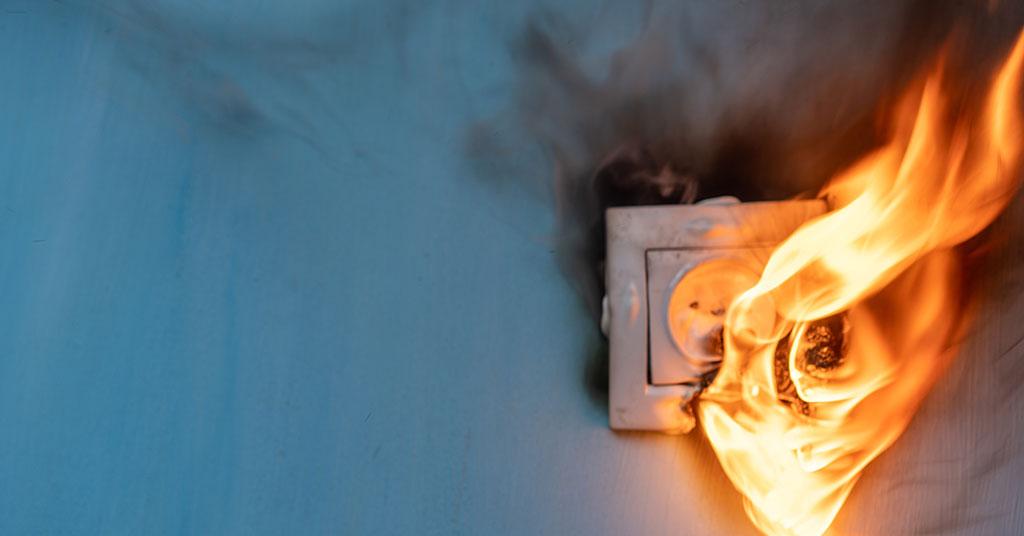
Burn injury claims can result in compensation for victims who suffer burns. This applies if the burns were a direct result of another party’s negligence.
For example, severe burns may be caused by medical malpractice. They might result from a road accident that someone else caused, or from a faulty electrical appliance.
If you or a family member may have a burn injury claim, contact us at DSC Attorneys for specialised legal advice and assistance.
How common are burn injuries in South Africa?
South Africa has a high incidence of serious burn injuries and deaths.
According to a 2017 Medical Research Council report, an average of 8.5 per 100,000 South Africans die every year due to serious burns. This is well above the world average.
An earlier study, published by UCT and Cape Town’s Red Cross Hospital, reported that burn injuries are:
- the most common cause of death in children under four
- the third most common cause of injury fatalities in people under 18.
According to a Medical Research Council report, 3.2% of the population suffers burn injuries each year. That’s more than 1.8 million people.
In many instances, these burn injuries could have been avoided through safer practices.
Common causes of burns
Common causes of burns in South Africa include accidents (flame or scalds); shack fires – often involving spilt paraffin; assaults; and electrical burns.
Sadly, it’s all too common for children to be scalded by kettles in day-care centres.
Patients in hospitals and medical facilities may suffer burns due to medical malpractice.
Burn injuries can also be caused by faulty electrical installations and appliances.
Burns can also be caused by chemicals; medical equipment; industrial procedures; radiation; friction; extreme cold or other causes.
Types of burns
Even minor burns are painful. More serious burns can result in disfiguring scars, lifelong impairment or death.
Burn injuries are categorised based on the degree of damage they cause to the body.
There are four levels of burn severity:
- first-degree burns damage the first layer of the skin (the epidermis)
- second-degree burns injure the first and second layers of the skin (the epidermis and dermis)
- third-degree burns damage the epidermis, the dermis and tissue beneath the skin
- fourth-degree burns damage skin, tissue and tendons and bones.
First-degree burns are superficial and can usually be treated at home.
Any second-, third- or fourth-degree burn requires immediate medical attention.
When can you claim for burn injuries?
For a burn injury claim to be successful, it must be shown that the injury resulted from negligence.
Accidents can be caused by negligence on the part of another person, a business, a hospital or a local authority.
Burns can also result from faulty products. In these cases, the parties involved in making and supplying the products might be held liable.
How much can you claim for a burn injury?
Burn injury claims can attract high settlement values. This is because of the high degree of pain and permanent injury that burns may cause.
The value of a burn injury claim will depend on a range of factors.
Among these are the:
- severity of the injury
- extent of any permanent scarring and disfigurement
- current and on-going medical expenses
- psychological impact the burns have had
- impact on income and future earnings.
Examples of burn injury claims in South Africa
Berto Cornelis Scheltens v Eskom Holdings Soc Ltd and City of Cape Town Municipality
In May 2020, DSC Attorneys secured a victory for Berto Cornelis Scheltens.
Scheltens and his wife headed to a church in Delft to collect equipment used in an earlier bible education class. When he touched the electric gate at the church entrance, Scheltens was electrocuted. He sustained serious injuries.
It turned out that two overhead electrical cables were hanging onto the metal fencing behind the church.
Later inspection revealed an error in the electrical installation.
Insulated piercing connectors (IPCs) were incorrectly connected to the low voltage (L/V) supply. This resulted in bypassing of circuit-breakers. Ordinarily, the circuit-breakers would have prevented current from flowing directly into the fencing and gate.
In a High Court ruling on 15 May, The Municipality of Cape Town was found liable for the plaintiff’s damages.
The full extent of the damages are still being determined.
Mpulwane v Road Accident Fund
In 2019, Ester Mpulwane was severely burned when her stationary vehicle was hit by a truck carrying sulphuric acid.
In a case against the Road Accident Fund, Mpulwane was awarded R2 597 385.
This included compensation for past medical expenses, past and future loss of earnings and general damages.
Gumede v Minister of Safety and Security
In 2015, the South African High Court ordered the Minister of Correctional Services to pay Sibongiseni Gumede R622,677.
Gumede, a prisoner at Durban Westville Prison, was working as a petrol attendant to fellow prisoners cutting grass with brush-cutters.
An accident resulted in 28% burns to his right axilla, chest, thorax, both forearms and hands.
In a High Court ruling, the Minister of Correctional Services was found liable for Gumede’s injuries and was ordered to pay compensation of over R600,000, plus the costs of the legal suit.
The award included compensation for future medical and ancillary expenses (R245,298), future loss of earnings (R77,379) and general damages (R300 000).
Burn claims overseas: the case involving spilt McDonald’s coffee
One of the world’s most famous burn injury claims involved hot McDonald’s coffee.
Stella Liebeck, a 79-year-old woman, spilt the coffee on her lap. It caused third-degree burns.
Liebeck underwent skin grafts. She was hospitalised for eight days, and her medical treatment continued for two years.
Liebeck attempted to settle the case for just US$20,000, to cover her medical expenses and lost income. McDonalds offered just US$800, so the case went to trial.
Her legal team argued that the fast-food giant was liable because its coffee was served at a scalding 180°F to 190°F. Other companies served coffee at a safer 140°F.
In 1994, a jury awarded customer Liebeck US$2.86 million in punitive damages and US$160,000 for medical expenses. It’s worth noting that South African law doesn’t recognise the concept of “punitive damages”. In this country, awards are limited to compensation for medical expenses, loss of earnings and/or general damages.
McDonald’s admitted it had known about the risk of serious burns from its coffee for more than 10 years.
What we offer at DSC Attorneys
At DSC Attorneys, we specialise in personal injury claims – including burn injury claims.
If you or a family member has suffered a burn injury due to another party’s negligence, contact us for the very best legal support and representation.
We work on a no-win, no-fee basis.


